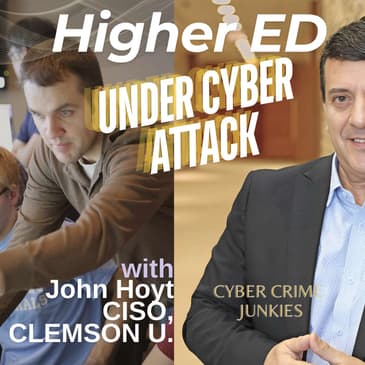
John Hoyt, the CISO of Clemson University, shares his journey into cybersecurity and discusses the top cyber risks in higher education. He recounts his first experience with an ethical hacker and how it sparked his interest in the field. Hoyt emphasizes the importance of cyber resiliency and preparedness in the face of evolving threats. We discuss topics including how is higher education targeted for cyber crime, top tactics used in social engineering, cost effective practices to limit cyber liability, how intelligence gathering is critical to security, Importance of visibility into operational risk, most common hacking tactics and a new approach to build a security culture.
Takeaways
- Cybersecurity in higher education faces unique challenges
- Social engineering, particularly through job scams and impersonation, is a significant threat in higher education.
- Cyber resiliency and preparedness are crucial in mitigating cyber risks
- Education and awareness are key
- Collaboration and information sharing between organizations are essential
- Creating a student-run SOC can be a valuable initiative
Breaking into cybersecurity requires passion, interest, and a willingness to continuously learn and adapt.
Chapters
- 00:00 Introduction and Background
- 01:30 First Experience with Ethical Hacker
- 06:32 Transition to Cybersecurity at Clemson University
- 07:00 Cyber Risks in Higher Education
- 09:04 Cyber Resiliency and Preparedness
- 11:18 Cyber Risks Faced by College Students
- 15:06 Social Engineering and Cyber Education
- 19:48 Collaboration and Information Sharing in Cybersecurity
- 22:12 Challenges of Cybercrime and Law Enforcement
- 28:15 Top Cyber Threats in Higher Education
- 30:11 Threats and Vulnerabilities
- 34:25 Creating a Student-Run SOC
- 38:02 Breaking into Cybersecurity
- 46:03 The Broad Scope of Cybersecurity
- 50:47 Generative AI and its Impact
- 51:32 Upcoming Events and Podcast
News on Clemson University and their Cyber transformation
- https://news.clemson.edu/meet-a-tiger-john-hoyt-director-of-information-security-and-privacy/
- https://www.clemson.edu/cybersecurity-summit/
- https://news.clemson.edu/clemson-opens-cybersecurity-operations-center/
True crime enters our homes and businesses daily. Learn from actual people who fight it daily and show you how in a thriller story. The Moving Target Trilogy. Book 3 to be released September 22nd, 2026. Start with any of them. Be a Moving Target.
Special Author pricing (30% off)
The Moving Target Trilogy. Book 3 to be released September 22nd, 2026. Start with any of them. Be a Moving Target.
Special Author pricing (30% off)
Growth without Interruption. Get peace of mind. Stay Competitive-Get NetGain. Contact NetGain today at 844-777-6278 or reach out at DMauro@NetGainIT.com or find more at www.NETGAINIT.com
Want to Watch?
Subscribe and stop reading about it after it happens: https://www.youtube.com/@CyberCrimeJunkies?sub_confirmation=1
Hosted by David Dean Mauro. Former trial lawyer, AI Security Advisor, FBI InfraGard member, VP of Strategic Growth at NetGain Technologies, and author of the Moving Target Trilogy (#1 Amazon Hot New Release, 2026).
MOVING TARGET TRILOGY. Nonfiction cybercrime thrillers. 🔥 4 years. 400+ interviews.
Book 1, Art of Online Camouflage: https://shop.ingramspark.com/b/084?params=d0YQ1pYtxeBRmSQLHLb9uT4aOliPrEuDSfOjQgpXQP9
Book 2, Obedient Machine: https://shop.ingramspark.com/b/084?params=S3F9zWWMC2y2eYiTmUGP91Owy9AUVG4zbLa6NwuX3cl
Book 3, The Ghost and The Machine. Presale open now, releases September 22, 2026: https://a.co/d/027LCoh6
Special edition hardcover, $17.76 for subscribers (30% off).
Want To Read True Crime Stories?
Chaos Brief newsletter: https://www.linkedin.com/newsletters/the-chaos-brief-694145911...
Learn to stop cyber crime. ~Cyber Crime Junkies
[00:00:00] You know, we all have a lot of data and it has to positively absolutely stay safe.
[00:00:06] It can't get into the wrong hands and the biggest challenge we have is how to transfer
[00:00:09] it from here to there.
[00:00:11] We all know as leaders that legacy tools that transfer our important files and sensitive
[00:00:15] data are mostly outdated and fall short on security especially with the demands of today's
[00:00:20] remote workforce.
[00:00:21] Relying on outdated technology puts our organization's brand at risk and that is unacceptable.
[00:00:28] So we are excited to invite you to step into the future of completely secured managed
[00:00:32] file transfer from our friends at KiteWorks.
[00:00:35] KiteWorks is absolutely positively the most secure managed file platform on the market
[00:00:39] today.
[00:00:40] They've been Fed ramped, moderate authorized by the Department of Defense since 2017.
[00:00:44] And unlike traditional legacy systems with limited functionality, KiteWorks has unmatched
[00:00:49] software security with ongoing bounty programs and regular pen testing to minimize vulnerabilities
[00:00:53] and the coolest part, they have easy to use one click appliance updates you will love.
[00:00:58] Step into the future of secure managed file transfer with KiteWorks.
[00:01:01] Visit KiteWorks.com to get started.
[00:01:03] That's KiteWorks.com to get started today in now the show.
[00:01:09] Today's Cyber Crime Junkies this is your host David Mauro.
[00:01:14] We have in this episode John Hoyt, the CISO of Clemson University.
[00:01:19] And we're going to talk about the top cyber risks in higher education.
[00:01:24] We're going to talk cyber crime but we're also going to talk about what it's like to be
[00:01:29] in the trenches and to move your way up in organizations from help desk support to various
[00:01:39] networking roles and then to catapult your career into cyber leadership and what that really
[00:01:46] means.
[00:01:48] The overarching concerns all the different threats that face organizations of any kind in
[00:01:54] particular higher education and it's a great discussion.
[00:02:00] John also created a student run security operations center, a student run sock that's right.
[00:02:08] And it's providing the graduates of Clemson unprecedented experience that is helping them
[00:02:15] launch careers in cyber security and beyond.
[00:02:20] And there's great other insight about breaches that we hear about in the news and how collaboration
[00:02:27] among organization information sharing is so critical today.
[00:02:31] So we hope you really enjoy it.
[00:02:32] This is the story of John Hoyt and top cyber risks in higher education.
[00:02:42] Some join us as we dive deeper behind the scenes of security in cyber crime today.
[00:02:48] Interviewing top technology leaders from around the world and sharing true cyber crime
[00:02:52] stories to raise awareness from the creators of vigilance.
[00:02:57] The newest global technology newsletter transmits cyber news into business language we all understand.
[00:03:05] So please help us keep this going by subscribing for free to our YouTube channel and downloading
[00:03:10] our podcast episodes on Apple and Spotify so we can continue to bring you more of what matters.
[00:03:17] This is cyber crime junkies, and now the show.
[00:03:31] Well welcome everybody to cyber crime junkies.
[00:03:34] I am your host David Morrow.
[00:03:36] In the studio today with us is John Hoyt.
[00:03:40] John is the CISO, the chief information security officer at Clemson University.
[00:03:46] He's been working in cyber security for over 16 years and began his career in IT back in 1999
[00:03:54] which I believe John we were worried about why to gay back then.
[00:03:58] Working for the city of Greenville in desktop support.
[00:04:02] His first experience with IT was when an ethical hacker hacked into the city's computer systems.
[00:04:09] I'm going to ask you about that during his career he's worked in hardware and software support
[00:04:15] as a UNIX and Windows system administrator as an and and also as a information security engineer
[00:04:24] and a SOC manager security operations center manager.
[00:04:27] He also served as director of information security deputy CISO and now has elevated himself
[00:04:34] to chief information security officer with Clemson.
[00:04:37] He's a published author and common in demand speaker on cyber security topics
[00:04:44] and assisted with cyber security courses at the university.
[00:04:47] He is a passion for IT security and helping people get into the field through mentorship
[00:04:53] and internships. He has four great children, a wonderful family and has been married for 23 years
[00:05:01] which by the way you should get a medal for at a fantastic moment welcome to the studio John.
[00:05:06] Yeah thanks David.
[00:05:07] Well I'm really excited about having you.
[00:05:10] Yeah thank you.
[00:05:11] So you know as we were preparing and talking earlier I didn't even know that your first experience
[00:05:19] with IT security involved an ethical hacker hacking into the city of Greenville's computer systems.
[00:05:26] Let's start there is that okay yeah we'll back up into what we had planned to talk about.
[00:05:31] Sounds good.
[00:05:32] So tell me about that story please share it with the listeners.
[00:05:35] Yeah so just working like you said why 2k was was the thing everybody was worried much
[00:05:44] to do about nothing but it was a big deal and we got a report an email with a PDF that had a printout
[00:05:55] of this ethical hacker that said hey I've broken into your systems.
[00:06:00] I found all these weaknesses I found data on your systems and please hire me and I'll come in
[00:06:07] and fix it for you right.
[00:06:09] Well that's a pretty common that is a common approach in terms of bug bounties right.
[00:06:17] But back in the day that was pretty aggressive.
[00:06:21] Yeah it was even for me I think the cool I actually still have the report I have the printout
[00:06:27] I kept it and what was cool that kind of triggered me into security was you know back then
[00:06:34] Cyberscurity was a voodoo black magic.
[00:06:38] Yeah you know you didn't know how to get into it you didn't know what the techniques were
[00:06:44] and so this PDF went through okay I use this tool that I'm enumerated this way then I move
[00:06:50] to this step and it wasn't the fault break down but it was he moved laterally within the systems
[00:06:56] right right probably escalated privileges moved up right and interesting back then they didn't even
[00:07:02] have a firewall so it wasn't that hard.
[00:07:05] Is it bug?
[00:07:08] People today don't understand and some of our listeners don't even understand all the technology
[00:07:12] but in general like firewalls you know like basic right.
[00:07:18] Basic antivirus things like those don't stop they stop a lot right now right yeah but there's
[00:07:24] such a staple that the threat actors are are already beyond that they're already trying to get
[00:07:30] it in other ways yeah right but can you imagine like the days where you don't even have that.
[00:07:35] Oh yeah the desktops were on the internet you know your personal computer was on the internet
[00:07:41] on the internet and so he went through that and that was like oh in a hot moment.
[00:07:45] Oh yeah.
[00:07:46] This is something I could do okay I can I get it now and that put me on the path for
[00:07:52] okay this is where I want to go.
[00:07:54] So that event really kind of sparked your interest into while this was almost super human
[00:08:00] like this right.
[00:08:01] This was really powerful how what he demonstrated.
[00:08:06] Absolutely you know I had seen more games you know that was the thing is oh this
[00:08:10] this is so cool but you you could go and IRC forums in the old school forums and try to find
[00:08:16] how do you know how to do this you know there wasn't information out there wasn't you couldn't
[00:08:21] go Google and YouTube everything on all the techniques it wasn't there.
[00:08:25] And now they have complete classes online I mean you can learn everything.
[00:08:29] I mean when a new device comes out like flipper or whatever those like the new device comes
[00:08:34] out and instantly within a month you have like 200 different ways of using this to start a car
[00:08:41] get into a house all this different all different things.
[00:08:45] Spoiled yeah yeah the kids are spoiled today but yeah now it was it was the trigger for me to
[00:08:53] get on the path for cybersecurity.
[00:08:56] That's wonderful I love that's I was going to ask you kind of like what inspired you to do this
[00:09:01] as opposed to the the arduous task in the in the in the traditional career of network engineering
[00:09:08] help desk support serving people things like that.
[00:09:12] Yeah I still had to do all that too right yeah because there wasn't a entry level as it's
[00:09:17] people say today there's no entry level positions there weren't entry level positions then either
[00:09:22] right you just kind of have to migrate and as organizations evolve and mature kind of in their
[00:09:29] cybersecurity maturity then they create these roles right.
[00:09:33] Right that so for me I went to a system administrator role and was looking at cyber the whole time
[00:09:39] like how do I do this how do I do this yeah and was just lucky and knew somebody here at the
[00:09:44] university and they were built they had just built their cybersecurity program their folks their team
[00:09:50] and he's like hey I know you're interested we've got a spot we need people when you want to come talk
[00:09:56] to us and that's great yeah went back and or went over and you know haven't looked back I'm still here
[00:10:02] 2007. That is just fantastic I mean let's talk a little bit about kind of top cyber risks in higher
[00:10:10] education I mean cyber risk how higher education it's pretty I mean higher education is targeted
[00:10:17] quite a bit there's there's there's a lot of data I mean k12 is targeted too as well because
[00:10:24] most parents don't pull the credit right of children when they're younger and so people if
[00:10:31] they can capture that they can do identity theft sometimes for decades before parents know about
[00:10:37] it we've seen a lot of tragedy there but Clemson is a phenomenal university I mean let me just
[00:10:45] talk a little bit about Clemson I got this off the site and it's pretty amazing so for 130 years
[00:10:51] Clemson University has shown unwavering dedication to the people of South Carolina university
[00:10:56] was founded with a land grant mission an innovative vision to increase the material resources of
[00:11:02] the state as a high seminary of learning since that time university has grown and esteemed
[00:11:08] an impact earning the R1 classification as one of the nation's most active research institutions
[00:11:15] developing international leaders and installing the core values of honesty integrity
[00:11:19] and respect more than 160,000 graduates so like staying at Clemson moving up there dedicating your
[00:11:29] career there and then becoming the chief security officer that's no small fee congratulations
[00:11:35] yeah thank you yeah and in universities are and I say this often they are small cities
[00:11:41] you have it's a great way of thinking about it yeah they really are well we have
[00:11:45] it we have a water treatment plant we have a skater system we have a police department we have a
[00:11:51] fire department we have people that live on your network right uh you know they're here all the
[00:11:56] time they're on your systems all the time and they're coming from all over the world to come
[00:12:01] to Clemson so you know a lot of people call it the Wild West which it is but it's not as much as
[00:12:08] when I first started when I first started security was was not in the culture you know it's just
[00:12:14] we we're here the secret sauce for the faculty right and researchers and you can't tell them no
[00:12:21] right that was the thing no no no you can't make their job more difficult they got to be able to do
[00:12:26] what they need to do and that's that's where those these risks have come up that you see higher
[00:12:32] ed incidents and breaches have really changed the perspective for leadership and other higher ed
[00:12:38] say hey you know those are our those are our brethren we see what's happened to them you know we've
[00:12:43] got to do something here and make sure we shore up our security on such a challenge because
[00:12:49] the threat actors only have to be right once you guys have to I mean I think as defenders a lot of
[00:12:56] defenders don't get the credit they deserve right like there are so many things that you guys stop
[00:13:03] on a regular basis and catastrophes that that you that you avoid regularly that nobody really
[00:13:11] hears about right you know I mean you know it's like Batman the one person yeah exactly Batman
[00:13:18] but I mean like the one person that gets through right that will throw your data up on a leak
[00:13:24] site on the dark web or whatever like they're the ones that everybody finds out about at the end
[00:13:29] and then they're like well what what did you do wrong and it's like they didn't do anything like
[00:13:33] it's gonna happen like right things happen but there's to me there's a difference between a breach
[00:13:41] right one that occurs even though best practices were happening and it gets
[00:13:45] were mediated relatively quickly it's responded well and a breach where it exposes like all
[00:13:52] these bad practices right where you where you just see this and you're like oh I can't believe
[00:13:57] they didn't get breached earlier like I can't believe this didn't happen five years ago right because
[00:14:02] it because of the media attention or the focus on it you you you you become aware of whether you're
[00:14:10] doing the best practices and you're you're doing as many good things as budgets will allow right
[00:14:16] and then as long as you're doing that everything generally works out pretty well
[00:14:22] that's what we've been seeing so it is and really it's cyber resiliency right it's just being
[00:14:28] prepared and preaching that to leadership that it's you know it's the sound of inevitability
[00:14:34] it's going to happen yeah um we want to do our best to mitigate it as quickly as possible
[00:14:39] we want to be prepared we want to train to be prepared for when it does happen you know
[00:14:44] and everybody talks about that but really putting it into action is best you can yeah and don't
[00:14:49] let's not let's not avoid the elephant in the world and that is the the the the Gen Z
[00:14:57] not even really the millennials anymore but the Gen Z the Gen Alpha group that you guys are
[00:15:04] they're going to be using your networks that are using your networks they are statistically
[00:15:11] at least more likely to fall for certain social engineering and certain tactics because they
[00:15:20] it's something about being what the data is showing is they they tend to be these digital natives
[00:15:25] right they tend to just assume you know hackers like ghosts in the wires are going to get in any way
[00:15:32] you know um and and and really a lot of what you guys do is educate all everybody
[00:15:38] educate the the the professors the researchers the staff the operations team as well as the
[00:15:45] students about you know digital hygiene cyber digital hygiene yeah it's actually that's a good topic
[00:15:53] we I helped with a class that we taught we taught social engineering actually use Chris
[00:16:00] Hayden Nagy's book dark waters fishing dark waters and um used topics from there and what we did
[00:16:08] is we there's the class it was not security folks they weren't cyber folks they were all walks of
[00:16:14] of degrees and majors and it was a technical writing class that most people have to take
[00:16:20] so we fished them initially like just fished them they're all the students we fished them
[00:16:26] and capture their score and then I taught on these topics about social engineering and
[00:16:32] and actually reviewed the fishing message that we sent them said hey here's the fishing message
[00:16:37] message we sent you interesting here's the things that you could have looked at they respond
[00:16:42] yeah you know just like most people oh you got me right you know they're like oh okay now I know
[00:16:47] right so there was like a few modules courses in the in the middle we fished them again
[00:16:54] and they did much better because we're literally showing them these this is how social engineering
[00:16:59] works this is how you are targeted and and it was actually for a free parking it was a raffle for
[00:17:04] a free parking so universities parking is like always the worst right right yeah so we were
[00:17:11] weren't sure but no it was great you know they like most of them fell for them finished it up and
[00:17:17] at the end we fished them at the end and then had them do a a presentation on what they learned
[00:17:24] and it was that was the coolest thing right to see them put together like a website of man my whole
[00:17:30] vision changed on what what security was and why I have to use two factor because most students
[00:17:36] you talk to like you know you're telling me from security they're like oh you're the guy that makes
[00:17:40] me have to use two factor right yes but this is why you know this is because this isn't this
[00:17:46] the balance between inconvenience and and harm right like right like cyber security
[00:17:55] is inconvenient but it's necessary right I mean and so as we can balance a little bit of
[00:18:01] inconvenience to avoid a major catastrophe then then then it's all worth it and we're seeing
[00:18:08] a shift to targeting students yeah over the of the last couple years and it's over faculty
[00:18:15] over faculty in faculty as well but we have more controls around and protections and
[00:18:20] invisibility around faculty students are a little harder to put around because there's so many
[00:18:25] and right what they're doing why you've got everything using their own devices right right right
[00:18:31] so it's a lot of job scams hey you know I'm a and they use professors we met earlier can you walk
[00:18:38] though listeners through some of the cyber risk that that college students are facing yeah definitely
[00:18:44] so what they're doing they're doing research threat actors are doing their research and they'll go
[00:18:49] look at professors at Clemson at other universities too this is global worldwide I know it's
[00:18:56] US based for sure and they'll identify professors and they'll send a message to students and say hey
[00:19:03] a bunch of students we're looking for a research position work remotely you know all you have
[00:19:09] to do is you know this is super easy you're gonna make 300 bucks a week send us your resume they don't
[00:19:15] even look at their resume they just say send us your resume and they ask them to go look up the
[00:19:20] prices of some equipment like a computer a printer a calculator whatever and they send that back
[00:19:28] to oh you're hired congratulations now we're gonna send you a check your first check and oh by the way
[00:19:34] how much does your mobile do you do mobile banking okay great now you're definitely hired
[00:19:40] and how much does your mobile banking allow you to deposit what's your max limit which these
[00:19:45] should be alarm bells right right oh it's two thousand dollars okay well we're gonna send you a check
[00:19:51] and we want you to deposit through mobile banking and let us know as soon as you get that deposited
[00:19:58] and they do they deposit it and then they say okay great that was for your first week
[00:20:03] we were just testing the whole system to make sure it worked now send this back say they send
[00:20:07] you two thousand send us back a thousand dollars so they go and they send back a thousand dollars
[00:20:13] and then the check bounces and the banks calling the student and they're out you know money
[00:20:20] yeah and they're like oh and their account may get closed down and everything else and they have
[00:20:24] the wiring instructions or whatever right they've got oh yeah it's that they'll use Zillow or
[00:20:30] Katio cash out they're using all digital oh yeah yeah yeah yeah yeah so students you know these
[00:20:37] are poor students anyways and they're getting hit with this and all of a sudden they think it was
[00:20:42] a professor they were working with yep and oh no now you're out you know real money and you can't
[00:20:48] pay for food next week or so it's it's a big problem well yeah and those that that scan I see
[00:20:56] that often with with elderly too that that targets various you know utilities and and other forms
[00:21:07] and they're they're operated in various parts of other countries oftentimes they're huge call centers
[00:21:15] right like they've they it's very sophisticated like the way that they are able to socially engineer
[00:21:23] the people build confidence and for a struggling student I mean like an opportunity like that
[00:21:29] sounds great like right to be true it's too good to be true yeah for sure oh what a challenge
[00:21:37] what a challenge um you know one of the other things that that you've done for the last
[00:21:41] couple years is a cyber auxiliary member with the United States Marine Corps could you explain
[00:21:46] what that is like what's what all do you guys do there yeah you know I was involved because
[00:21:52] another friend of mine had got into that as a volunteer and really just just they're kind of when
[00:22:00] they have questions or as a mentor they may get a call spun up and they're asking questions about
[00:22:06] a specific product or a strategy and as they have cyber teams within within the Marines which I
[00:22:13] didn't know they even had cyber teams within the Marines they'll invite professionals to come in
[00:22:19] you have to get through a vetted process you know get get get all the background checks completed
[00:22:24] but they invite you in you come in you can just be there as a sounding board or be there to offer
[00:22:30] advice or just if they have a question like for example Splunk if they want to know they're using
[00:22:35] Splunk for example and they want to know have you used that okay please show up at this call
[00:22:40] and you can give submit bias on pros and cons or tactics and techniques so yeah it's a
[00:22:46] cool way to be involved yeah yeah what do you think in your research in your experience yeah
[00:22:54] several of the military arms as well as the federal agencies all have different cyber teams
[00:23:01] right and and there's a call recently to kind of have a US kind of combined because
[00:23:10] like each each branch of the military is kind of doing their own thing they're all doing well but
[00:23:16] they're all kind of doing the best practices in their own way they're a unique way what are your
[00:23:22] thoughts if they create like a national cohesive there be benefits to that whether we downsized I
[00:23:29] don't know if you know anything about that yeah I know like what your thoughts are that's a good
[00:23:33] question I have been involved with the with the National Guard just like I've worked with those guys
[00:23:39] they've come here and visited Clemson actually visited our our sock and kind of wanted to know how
[00:23:44] we were operating in our local National Guard and talk to those folks talk to the Marines they are
[00:23:51] you know it's a good point they are all kind of in their silos right they're doing their own thing
[00:23:56] and maybe they're talking maybe they're not talking and I think that's a big deal and with CISA
[00:24:01] being a great example of how they're trying to collaborate all the information to disseminate it
[00:24:06] across everybody and in higher ed that's one of the thing coming from corporations to
[00:24:13] two Clemson to higher ed higher ed is all we're not competing you know and we're all in it together
[00:24:20] which everybody should be but you know when you're a corporation a corporation there's still something
[00:24:25] you might be holding back or you know there's some competitive competitiveness with that
[00:24:30] and in those silos in the government and military they're still silos there so I think
[00:24:37] the better we can collaborate that's what we need to do for sure yeah absolutely yeah and I
[00:24:42] think that information sharing between the private sector and the federal government and and
[00:24:49] agencies you know I think that is something that a lot of uh iSACs are trying to work on a lot of
[00:24:58] think tanks are trying to work on right now and I think that would be hugely beneficial because seeing
[00:25:04] what other you know see you know we all kind of know what we're supposed to be doing right but they
[00:25:10] all kind of have different threats depending on their sector right so seeing the tool sets that are
[00:25:17] used the best practices how they're actually rolled out it's one thing to have a list of things
[00:25:24] but everybody does them differently right and sorry it's really interesting to kind of uh
[00:25:31] have that information sharing um because I think that collectively then we we all kind of raise our
[00:25:38] level uh of defenses overall it's good to have some competition you know yeah
[00:25:45] and uh and I've seen those teams kind of compete in competitions which is great because they all
[00:25:50] bring their A game um but at the end of the day you know we it's us against the threat actors we
[00:25:56] all need to to help each other out right and one thing that a lot of uh listeners don't always
[00:26:01] realize is a lot of times the uh the threat actors live in parts of the world where
[00:26:09] they're not there's no consequences for them to do it like they can go and destroy lives
[00:26:16] interfere with health care treatment cancer treatment disrupt ruin somebody's financial
[00:26:23] condition destroy the reputation of of of businesses or universities whatever and there's no
[00:26:32] consequences to that right so long as they don't do it to one of the cis countries like the
[00:26:40] the the Russian speaking or the Syrian or whatever it all kind of depends on which threat actor group
[00:26:46] we're talking but um that's something that's that's always shocking to so many people
[00:26:54] stay with us we'll be right back
[00:26:58] you know we all have a lot of data and it has to positively absolutely stay safe
[00:27:03] it can't get into the wrong hands and the biggest challenge we have is how to transfer it from here
[00:27:07] to there we all know as leaders that legacy tools that transfer are important files and sensitive
[00:27:12] data are mostly outdated and fall short on security especially with the demands of today's remote
[00:27:17] workforce relying on outdated technology puts our organizations brand at risk and that
[00:27:23] is unacceptable so we're excited to invite you to step into the future of completely secured
[00:27:28] managed file transfer from our friends at kite works kite works is absolutely positively the most
[00:27:34] secure managed file platform on the market today they've been fed ramp moderate authorized by the
[00:27:38] Department of Defense since 2017 and unlike traditional legacy systems with limited functionality
[00:27:44] kite works has unmatched software security with ongoing bounty programs and regular pen
[00:27:48] testing to minimize vulnerabilities and the coolest part they have easy to use one click
[00:27:52] appliance updates you will love step into the future of secure managed file transfer with kite
[00:27:57] works is it kite works dot com to get started that's kite works dot com to get started today and now
[00:28:04] the show
[00:28:09] yeah you get the well who who are we going to arrest
[00:28:13] well yeah and how are you not gonna arrest anybody right yeah yeah I mean we do a lot we're
[00:28:20] we're part of infragard and so we work a lot with Department of Homeland Security and
[00:28:24] and the FBI and we've we have people on the on the podcast as well as other kind of public service
[00:28:32] presentations where we've done with a former heads in the FBI and and they're like
[00:28:38] unfortunately you people are not going to get their money back these guys are not going to
[00:28:43] get arrested like that's the general truth right that's the scary part now how do we defend and
[00:28:50] how do we you know I think in the last year we've been able to take down we meaning the the
[00:28:57] law enforcement generally from the from the from North America in collaboration with with the EU
[00:29:06] and the United Kingdom it looks like we've been able to take down quite a bit of these cyber
[00:29:11] crime gangs yeah I mean when you see the you know when you think about lockbit which was the
[00:29:17] top yeah it was the top in I mean they had more breaches and more revenue generated illegally but
[00:29:27] yeah they they run out like a big business they had more done than most of the others combined
[00:29:34] like they weren't even close to them and they got taken down in the way they did it was it was
[00:29:40] psychological operations I mean when you think about what breaches what these ransomware gangs do to us
[00:29:46] and due to organizations they destroy your reputation right and but what they recognized is how
[00:29:54] important the reputation is for cyber criminals cyber criminals go after other cyber criminals right
[00:30:01] there's no real honor among these right and and and by destroying their credibility there right
[00:30:08] they weren't able to attract and maintain and keep the level of of talent that they needed to
[00:30:17] run their operations then they got banned by their own Russian forums right then the feds went
[00:30:23] and took down their site their infrastructure and then by doing that they actually you know would post
[00:30:32] things kind of mocking them yeah I saw that showing them that which kind of showed look your
[00:30:38] reputation isn't all that good is it right it was one of the first times we've seen in a long time
[00:30:44] where we were playing not just the technical game but the political and and and um and psych ops
[00:30:55] basically uh approach yeah to that it was very effective yeah I was cheering yeah it was really
[00:31:02] it was really powerful see yeah I I I absolutely loved it um and then you saw black hat
[00:31:11] mm-hmm you know black hat which had been disrupted back in look a couple November December
[00:31:18] first it sounds right yeah in the fall by by a coordinated effort between federal law enforcement and
[00:31:25] and and and uh the nac the uk's FBI essentially and then um and then they came back
[00:31:35] and had that change health care breach which was a big one um apparently got 222 million
[00:31:42] right and then said they claimed oh look the feds got us again and they put up the old
[00:31:49] the old notice that oh we were taking town meanwhile they ripped off their own criminals they
[00:31:55] ripped off their own hackers and basically did an exit scale yeah shocking right like everybody's
[00:32:01] sitting there watching this going is this really happening like you guys have no rules at all
[00:32:07] yeah yeah doesn't like do you guys not hang out at the same clubs or something like it's
[00:32:11] somebody not gonna like yeah is somebody not gonna like bump in you and go hey you know you owe me 22
[00:32:17] million right like can we like at least shore up like I it was just it was an amazing year to see
[00:32:24] and now it's going to be a totally different year because the two top and the reason we just talked
[00:32:29] about those is those were the two top like almost every breach you saw about in the news
[00:32:35] it involved one of those two essentially and now they're gone so now it'll be interesting to see
[00:32:42] some of these other vacuum power vacuum yeah the power vacuum happens fast yeah
[00:32:48] so and they rebrand a lot of these are the same people that were involved with conty back in the
[00:32:53] day after they were taken down things like that so uh really really didn't mean to go down that
[00:32:59] down that hold but um uh several crimes kind of interesting it's like Batman yeah yeah basically
[00:33:06] that's what this is so in higher education and I'm gonna ask you about anything specific
[00:33:12] involving Clemson you guys do a phenomenal job but what you're seeing you see higher education more
[00:33:18] than more than other people in other industries so what are the what are some of the top
[00:33:24] like what are the what what do you say I mean clearly social engineering right fishing happens
[00:33:31] um the scenario that you talked about with the job scam while it scammers more than like
[00:33:37] ransomware gangs it still sounded like it it involved a level of business email compromise
[00:33:44] or not really it was more impersonation oh it was just more impersonation but we do we definitely see
[00:33:51] more levels of impersonation you know from executive leadership and even trying to get out of
[00:33:58] a lot of it is just getting out of our monitoring and detection and I think this is across whatever we
[00:34:04] see we usually check with other higher ed and they're like yep we us too right so they're
[00:34:10] emailing directly to personal email accounts of executive leadership impersonating
[00:34:16] the president or somebody else and saying hey and their name dropping the cfo their name
[00:34:22] dropping the coo hey you know can it still money mostly money related can you give me can you
[00:34:29] transfer me this money right but they're doing more homework for sure and a lot of osin a lot
[00:34:35] of resource intelligence tech you know wishing more that's I think it's still gonna increase right
[00:34:43] um and you know you saw the the AI being involved right and I'm sending these to my leadership
[00:34:50] like hey just be you know a healthy paranoia right trust with verify trust with verify we need
[00:34:56] to code word yeah right yeah and just education i think that's the difference yeah vigilance
[00:35:02] but that that's what we're seeing is more homework by the threat actors to target individuals
[00:35:09] and a finance department or just leadership executive leadership to try to get those
[00:35:15] folks hooked and then get them out of our system so even if they started and our email system
[00:35:22] they'll quickly say oh text me here or send me an email here because for whatever reason
[00:35:29] so then off the off the off the main off the main system to try to get our visibility out of it
[00:35:35] because then we're really relying on i mean you know there's not really great solution for text-based
[00:35:41] stopping text-based threats and identifying those um so that's they're clever i mean they're
[00:35:48] definitely clever um and still the big the big ones that you know social engineering and vulnerabilities
[00:35:54] right internet-exposed vulnerabilities move it was huge for universities that was a big one if
[00:36:00] you look at a lot of university breaches last year they were around move it most of them were
[00:36:06] around move it which could have turned into also ransomware yeah but that was a big one.
[00:36:11] was run by move it was the encrypted on one end and crypted on the other it was that file transfer
[00:36:18] program right talked about it on on our show numerous times we have several episodes on it
[00:36:24] I mean it's one of the largest just pure extortion campaigns in history um and it was
[00:36:29] it was run by it's still being still going on today and it's being run the campaign the
[00:36:36] criminal campaigns being run by the clop ransomware game but they're not really launching ransomware
[00:36:41] could have it doesn't seem like they have they've just looks like they've exploited
[00:36:46] the zero-day originally and and continue to get into either certain vulnerabilities or
[00:36:55] or or they still stemming off that original access that they had but um it hit a lot of
[00:37:02] organizations like massive just thousand and three out of the four major consulting firms
[00:37:09] right like the Ernstian Youngs in the in the and the Pricewaterhouse all of those
[00:37:16] see yeah and and you're seeing I would say you're seeing what I'm telling leadership is it is more
[00:37:21] extortion than necessarily encryption you know it's easier so let's head a less things you have
[00:37:27] to get detected get the data and get out if you can um so you know ransomware still a problem or
[00:37:34] that gang is still a problem even if it is extortion it's really turned almost into is it
[00:37:39] is it more like extortion as a service yes yeah yeah you know and they they create the leak sites
[00:37:45] and they publish right right absolutely what seems like you you you guys there it clums in
[00:37:53] collaborate with other higher ed groups absolutely when you see things so that's phenomenal yeah um
[00:38:00] you don't really see that all that time all that often in the commercial private sector
[00:38:04] and it's because you see a domino it's right hey if we got hit you're going to get hit if you
[00:38:10] haven't gotten hit yet so it is a shotgun usually approached but then it's they'll try especially
[00:38:16] if they have success at one higher ed they know somebody else is probably running similar platforms
[00:38:23] or software and they will just hit as many higher edges they can yeah um so it's it's it happens
[00:38:29] over and over again so we just try to get the word out you know sound the alarm hey we saw this
[00:38:35] you may be seeing this be ready and just just kind of always talking it it's just great
[00:38:40] it really is one of the best things I see with higher ed is just the collaboration
[00:38:45] yeah that's really important yeah for sure yeah um
[00:38:51] you I mean I don't want to let you go without you sharing the the story of creating like a student
[00:38:58] run sock I mean I mean uh that is just a phenomenal like initiative that you guys created can you share
[00:39:08] with us that story I mean it is fantastic yeah it's one of the best things I've ever done really
[00:39:15] for my for me and for my career um and I almost decided not to do it but me back up you know in
[00:39:22] 2015 they were discussions like hey we're gonna build a sock and at that time there was only like
[00:39:28] three people in cybersecurity me as the main engineer doing detection and architecting
[00:39:34] and basically doing all the groundwork and the tech work and we had to see so and another guy
[00:39:39] and I'm like what who's gonna run this sock right you know we I can't do my day job and manage
[00:39:46] students but um you know I decided I said hey I'm gonna put my name in the hat I don't know who
[00:39:52] y'all were thinking about um for this but I'm I love working with students I had a few interns
[00:39:58] a couple interns before this and said this I love working with students I'd love to do it right
[00:40:04] I don't know how I'm gonna do it but I'm glad to do it so they built a room had monitors had you
[00:40:09] know a desk had desk and a kind of a u-shape and it was cool it was like all dark and everything no
[00:40:15] windows um proper sock and so we just put the word out and said hey you know hopefully if we
[00:40:22] build it you will come and we had three four five and then six or seven students come and they
[00:40:29] they had no idea what it was I didn't know what it was gonna be right um and we didn't know
[00:40:34] exactly how to filter for like who's the right student mainly based on passion like what do
[00:40:38] you know about cybersecurity yeah how interested are you in cybersecurity and uh and really right
[00:40:44] right out the gate it was a game changer like we were able to like for me an incident happens
[00:40:51] and I'm like okay force multiplier student A student B you know can you go look at this can
[00:40:57] you help me investigate this right and divide and conquer and even though they didn't have all
[00:41:02] the skills yet they were still giving him capes yeah they just still give him capes to go fight
[00:41:08] crime yeah and they're doing it on the job training right they're fighting fires with me so
[00:41:14] how much how great is that for them when they go interview and they're like hey I was involved
[00:41:20] with real incidents I helped protect Clemson and while I'm finished I finished my degree and got
[00:41:27] this real experience so we went from there and built to more students and then eventually I
[00:41:35] hired a sock manager who I tricked into coming back he actually was my very first intern very
[00:41:41] first intern that's good social engineering yeah you know as I hate I need somebody help run
[00:41:46] the show please come back right now you're amazing I love bomb in the beginning we're telling
[00:41:52] you're the greatest come on back we're lucky to have you yes and you're like please do please I
[00:41:58] can't do everything now he's my deputy C so so he was my first intern yeah it's awesome
[00:42:04] and the and the student run sock is still always kids it's doing great we usually have about nine
[00:42:10] to ten students that are really and they could difference it's not just they're not doing tickets
[00:42:15] I mean they do just tickets but they're really doing real work yeah and then they go out there
[00:42:21] and they're they're killing it right they're ready to hit the street get a job because so many
[00:42:26] otherwise gorgeous graduate with the book knowledge right at the practical experience absolutely yeah
[00:42:32] oh that's fantastic that is like the greatest thing I've heard yeah that is really cool
[00:42:37] yeah that's really cool thank you so let's talk about other ways that people can can break into
[00:42:43] cyber security first of all I mean now you're the guest so I'm gonna let you tell me what what
[00:42:49] your ideas are especially since since you sit in that position in higher ed but I just want to say
[00:42:54] one thing and that is like cyber security is as broad of a term as business like it's really broad
[00:43:00] is it not like right there's so many like you could be highly technical and be able to break things
[00:43:07] down go offense go do ethical hacking like go become a hacker for the good side right but there's
[00:43:14] so many other roles why don't you walk us through the kind of what you've experienced what
[00:43:20] what suggestions you may have yeah you know a big thing I get most folks get us this all the time but
[00:43:28] is how passionate or how interested are you you may not know how passionate you're gonna be
[00:43:33] yet but it's a journey and in art do you want to be a seesaw are you just trying to get your feet
[00:43:40] in the door and you don't really know what the security is and that's one thing we find when
[00:43:44] students they think you know they hear about security it's cool you get to hack things maybe right
[00:43:50] right um what do you know about cyber security is it something you really want to do because maybe
[00:43:55] it's not when you find out what the day job is um maybe it is and so that interest level how serious are
[00:44:03] you and then it is kind of choose your own adventure I think and that's how it was for me and now looking
[00:44:10] back as a seesaw there's things I think I would have went on branches out ahead of time like more
[00:44:17] GRC more governance risk compliance knowledge along the way where I went more the technical route
[00:44:24] now I have to do both right I have to put both hats on depends on what the day is or the meeting
[00:44:29] or whatever yeah so in GRC for those not technical is governance risk compliance right right governance
[00:44:36] is the the the initiative the regulations the the um overarching right right
[00:44:47] right translation of cyber to the impact of the organization yeah risk is the risk management
[00:44:53] component compliance are the actual technical aspects of reaching certain levels of standards and
[00:45:00] control is absolutely and students now you know when like I was saying there wasn't there weren't
[00:45:06] entry level jobs when I started and now they they're going straight into a job normally or maybe
[00:45:15] they're starting they're not going in IT first right which is the advantage I had is I built up my
[00:45:21] IT skills and then I could use that as a platform to get into cyber security right mostly the need
[00:45:28] you know is so big you might go straight into an entry level security job and you won't have had
[00:45:34] those experiences of working at a help desk right getting called it 3 a.m. to fix a server um having
[00:45:42] to do you know whatever in IT and I do think that is good I don't say you have to do that but it's not
[00:45:48] a bad thing to do because it does give you language when you talk to those groups yes you can speak
[00:45:54] their language like you can talk to the if you've done development where you can talk to developers
[00:46:00] you can talk to system administrators you can talk to network engineers because it's another
[00:46:05] group that has their own lingo it's something that helps with the negotiation and
[00:46:09] and whether you realize it or not no matter what field you're in like there are multiple
[00:46:15] negotiations that we all do every single thing and part of it is internal and that is making an
[00:46:22] internal business case right and so by being in if you're in the cyber security role
[00:46:28] and you have to make your case to the technology network operations center right it really does help
[00:46:35] being able to speak their language and having to be like I've been there I you know I I know what
[00:46:41] that's like and being able to to guide them along the way and understanding that business
[00:46:48] speak right understanding the business motivations so that if you can't sell in security
[00:46:54] that the business side of the risk then you're going to have a hard time making your case
[00:47:00] well over security they should just do it and it doesn't work that way right no not at all right I
[00:47:05] mean and and here's a common thing we see in every industry including K-12 higher ed and commercial
[00:47:13] financial institutions you name it is there are needs that like the cyber security team has internally
[00:47:22] at the organization whether it's something they're building or something they're buying some level
[00:47:27] of service whatever that they're buying but that that translation that making of the business case
[00:47:34] to non-technical decisions absolutely absolutely right that is where a lot of this falls down
[00:47:40] and then I also feel that the industry itself has hurt itself because there's so many companies
[00:47:48] and one trick pony's out there that just make these over premises like they're like buy this box
[00:47:54] and you will have security right and you know like all the hacker friends of ours are like oh
[00:48:00] love kit let's see that box we'll say we'll bring that box up at the next b-sides and we'll blow
[00:48:06] that thing up right you know it's like no it's not gonna work that like yeah like that but
[00:48:12] but the over promising has hurt but really the the the challenge of breaking down the technical aspects
[00:48:21] like all these merg raise will be oh we'll be able to detect this and they're still sitting
[00:48:25] there going why do we need it's expensive right like what language are you speaking again like
[00:48:32] because it's like measuring risk and being able to talk about it as without it right your risk is
[00:48:42] is very high right and there's a lot of standards out there that could help guide that
[00:48:47] having that business impact conversations really I think one thing that really changed my perspective
[00:48:52] because it was from a friend of mine his name's Adam Anderson and he said be Yoda not Luke
[00:48:59] because I used to be Luke I'm like the hero I have to say no because on my watch if I say yes
[00:49:05] then it something happens it's on me versus be Yoda and you're just there hey in my opinion
[00:49:12] I highly recommend you do this because the risk is this and this is what's gonna happen if we
[00:49:19] don't do it here's what it's gonna cost to fix it right and you're you're advising you're giving
[00:49:24] then the this is a business decision exactly versus a year just there to stop
[00:49:31] the everything because sure it's gonna not work and you know it's gonna reduce the risk but it's
[00:49:37] also not gonna work or not the way they think it's gonna work so be advising be a Yoda right give them
[00:49:43] the that's a great analogy yeah that that that really is because should they're come a day
[00:49:50] and everybody will experience it right one one when a breach gets through and and there's some
[00:49:56] damage hopefully it's not massive right but it's just some level of damage then there's gonna be
[00:50:01] an inspection about like well did you recognize the risk yeah we did we recognize the risk and we
[00:50:08] we brought it up to leadership and we explained it and they made the decision for whatever reason not to
[00:50:14] right right but at least you explain pros and cons and then leadership is there and they're still
[00:50:19] able to say well yeah at the time we didn't feel that was necessary because we figured it was a
[00:50:24] manageable risk and they're still fine and and both sides still are will survive that the brand
[00:50:31] will still survive after that right it's when there's no thought behind it or or or they don't
[00:50:39] explain it well enough right right don't get it done when they really needed it and then
[00:50:46] and then there's finger pointing and suddenly yeah that's what you want to avoid
[00:50:50] yeah for sure and just be beware of the tech speed for sure you know that's what yeah especially if
[00:50:55] you come up the tech tree and you're just they're just glazing over there don't know what you're saying
[00:51:02] so you need somebody to help you be able to craft it in a way that they understand and they's in
[00:51:08] their language that's what I do every day my day job like my day job is yeah like sitting in the
[00:51:14] meetings hearing all the technical speak going okay now what does that mean in English translate
[00:51:20] and then having to translate that into impact right it's a matter of risk it's this and then just
[00:51:26] hopefully just evolving organizations over time right right like whatever is happy I mean let's
[00:51:34] talk about AI real quick like how has AI impacted what you're seeing yet or has it not yet like
[00:51:42] generative AI yeah there's always been machine learning right and I'm not talking about
[00:51:47] every product now says like everything like gym shoes are like made with AI and like how is that
[00:51:54] possible so it's interesting you know definitely keeping tabs on it and I send Chris had nagging
[00:52:01] messages email or slack messages when I see hey this new social engineering attack use the AI
[00:52:07] and those kind of things I definitely keep tabs on it I do think we're going to see more of it
[00:52:13] it's it really is the way I describe it's like AI versus AI right how good is our AI exactly
[00:52:20] detecting those things versus somebody using AI to create those especially social engineering attacks
[00:52:26] and it's gonna be an arms race and it's gonna be who has a better AI one of the red flags whenever
[00:52:32] you would train people on how to spot a fishing email right it was like well might be broken
[00:52:37] English there might be you know misspellings or my my my look odd or whatever all that's gone yeah
[00:52:46] all that's good yep yep for sure so I think it's just an awareness thing and really communicating
[00:52:53] hey these are going to get better and they are gonna they're if they're not already which they are
[00:52:58] um how does our tools deal with those attacks does it detect it does it miss it because it
[00:53:04] looks so good and it's you know using AI to help it look that way yeah so you just got to keep up
[00:53:09] with it it's the genie's out of the bottle right you just got to deal with it and grow with it
[00:53:15] how does how does you know you don't need to tell me about Clemson but but in general on higher
[00:53:21] how are you guys handling the use of generative AI just as an institution like I'm like I'm sure
[00:53:28] there's like students that are using it and like professors probably have some software yeah
[00:53:33] that that like we'll detect it and and then they're arguing why I really wrote it like well the
[00:53:38] software is still going right yeah all that but are you seeing it in any other facets
[00:53:44] I'm just curious like we're all AI has been yeah implemented in higher ed they you know
[00:53:49] well you've got researchers that are looking to research AI they want to do research in AI
[00:53:55] right um but a lot of universities what they're doing when not a lot a few I have seen is they
[00:54:00] are getting their own version of like chat GPT you know it's like ex-universities on
[00:54:07] instance so everything's within that bubble right so that way they can share some
[00:54:12] a little bit of confidential information right right you can you give them guidelines and what we're
[00:54:16] doing is we're giving guidelines we're saying hey here's what you know data not to do based off
[00:54:22] of classification here's how to be safe it's education getting the word out there.
[00:54:27] When it first came out like you saw what was it Samsung like the engineers there like put the source
[00:54:34] code right in right in there and because it was fixing bugs yeah it was doing it great the problem
[00:54:39] is is it's out there once you put it in the machine you can't get it back right and so then other
[00:54:45] people were like give me the source code for for the new Samsung product and boom it was spitting
[00:54:50] it out and they're like oh my gosh that's not right I don't know I think it was Samsung
[00:54:56] I don't remember yeah as as as I read but if it wasn't please don't send me hate me
[00:55:02] okay I'm like it was somebody like just put an asterisk by whatever the point is that
[00:55:08] that did happen with a technology creator so and you can see how that risk could happen
[00:55:16] yeah we're just trying to get that get as far ahead as we can to get the word out to faculty
[00:55:21] and students hey we know this is a thing we know you were going to use it just here's the guidelines
[00:55:28] around it now there's still an issue of detection of people using it for submission grades sure
[00:55:35] that's going to be our race too yeah that that that I mean that's just I mean that's like
[00:55:42] I mean it's like the old days where people would like have it on the inside of their bottles right
[00:55:47] they would like have the test there I might love to bring a water bottle in okay good and then you're
[00:55:52] like right can I look at your water bottle I mean it's just an arms race that arms race will always
[00:55:57] go on so long as there is testing absolutely take away testing we won't have that problem
[00:56:03] so that's that's fantastic hey John Pleasure speaking with you today absolutely fantastic what's
[00:56:10] on the horizon for you coming up we're going to be speaking at any besides are you going to black
[00:56:16] hat what's what what's on your horizon yeah for me I'm thinking about the Wild West Hacking Fest trying
[00:56:22] to get out there this year haven't been haven't been yet so I'm excited to go may try to put in
[00:56:28] to first speaking slot if I can get around to it get to it oh people would love to hear from
[00:56:33] yeah and my my cohort Steve and I just recorded our first cybersecurity mentors podcasts
[00:56:40] that's great that's around mentorship and lessons we've learned doing this with students and others
[00:56:46] and trying to get the word out there not just for people that are looking to get into cybersecurity but
[00:56:50] also encourage more folks to volunteer and to be mentors absolutely absolutely well that's
[00:56:57] great well we're excited well as that podcast keep keep going um we're we're happy to help you
[00:57:04] guys promote it like that's fantastic thank you David love man that's great well John Hohe thank
[00:57:11] you very much good luck with Clemson we will this won't be the last time we talk I just talked
[00:57:16] to Chris Hannigay earlier today so like I'm sure we were going to be bouncing around the same circles
[00:57:21] for awesome yeah keep up the great work man what you've done is just absolutely outstanding and I
[00:57:28] love I'm I'm gonna as soon as you get that podcast going I'm definitely gonna give it a listen and
[00:57:33] spread the word so yeah thank you thank you for having me now absolutely welcome thank you so much
[00:57:39] yes sir
[00:57:48] well that wraps this up thanks for joining everybody hope you got value out of digging deeper behind
[00:57:52] the scenes of security and cybercrime today please don't forget to help keep this going by
[00:57:57] subscribing free to our youtube channel at cybercrime jokies podcast and download and enjoy all
[00:58:04] of our past episodes on apple and spotify podcast so we can continue to bring you more of what matters
[00:58:12] this is cybercrime junkies and we thank you for joining us