

Ever wonder what happens when a retired FBI cybercrime supervisor walks Inside a $15 Billion Cybercrime Empire? Into the actual belly of the beast?
Not to arrest someone. Not to read reports from a desk. But to stand inside the compound where someone is right now texting your grandma about that “investment opportunity”?
Scott E. Augenbaum just got back from Cambodia. And what he saw should fundamentally change how you think about every weird text, every too-good-to-be-true investment pitch, and every “wrong number” message you’ve ever received.
The Beautiful Buildings That Are Actually Prisons
Here’s the part that’ll mess with your head: these aren’t some dingy basement operations. We’re talking gorgeous high-rises on beautiful beaches. Casinos that look like downtown Manhattan. The kind of places you’d want to vacation.
Except they’re jails.
Over 100,000 people—possibly as many as 150,000—trapped through human trafficking. Forced labor. Sixteen-hour shifts with cattle prods to their necks. All of them working one job: separating you from your money.

Do the math. We’re playing whack-a-mole with an operation that generates somewhere between $12.5 and $19 billion annually in Cambodia alone.
Across Southeast Asia? Try $50-75 billion a year. That’s not a typo.
How We Got Here (And Why It’s Getting Worse)
Scott laid out the timeline, and it’s almost elegant in its simplicity:
2018: China bans online gambling. Chinese investment floods into Cambodia to build casinos on the coast—easy flight from China, economic boom for Cambodia.
2020:COVID hits. Travel stops. These gorgeous casinos sit empty.
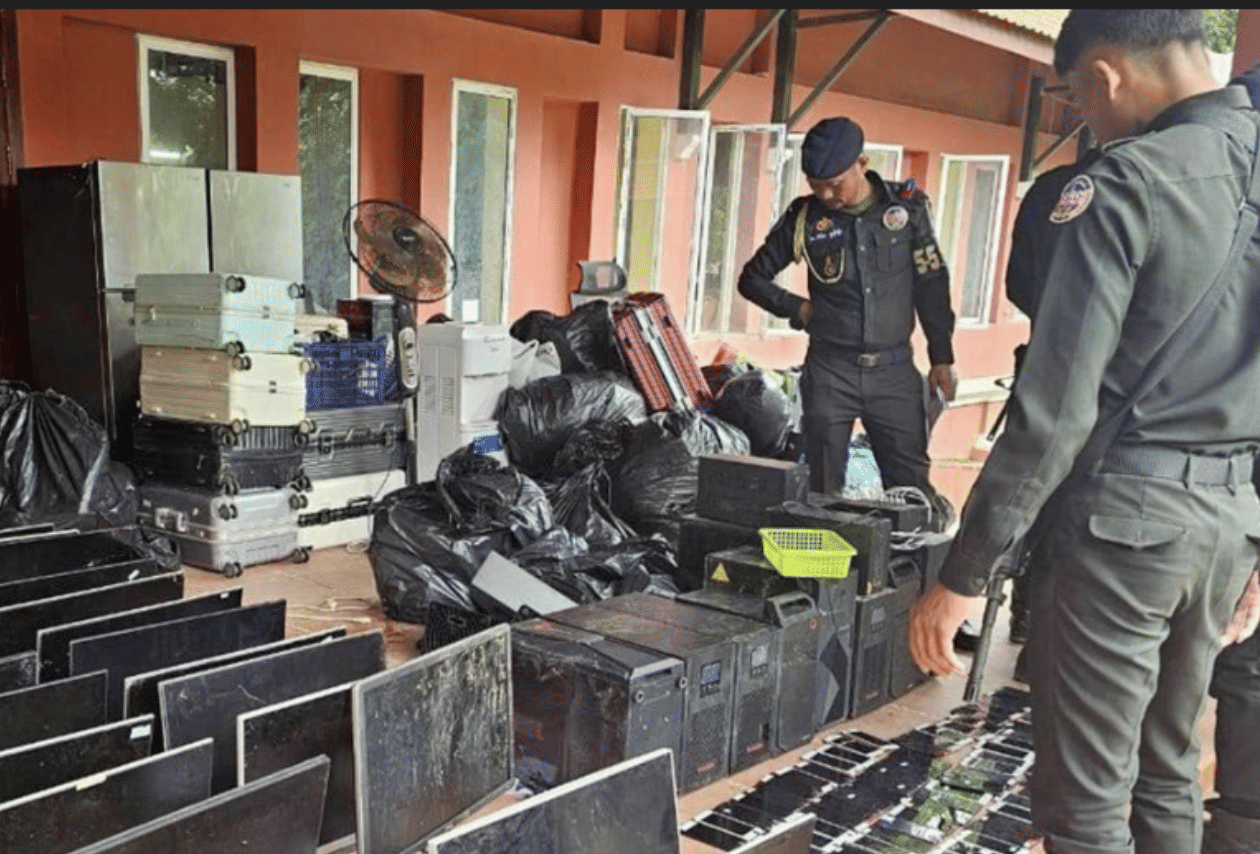
2020-2022: Here’s where organized crime does what organized crime does best—they pivot. Those empty casinos become scam centers. The infrastructure was already there. The economic investment had already happened. The buildings were beautiful, the location was perfect, and Cambodia had bigger problems than asking hard questions about what was happening inside.
2022-Present Pig butchering scams explode. Romance scams get sophisticated. The “wrong number” text becomes an art form. And Americans alone lose at least $10 billion in 2024 to scams with roots in these operations.
The Four Truths Scott Wants You to Tattoo on Your Brain
After 28 years with the FBI and now standing inside these operations, Scott’s message hasn’t changed—but it’s gotten more urgent:
1. No one expects to be a victim. Not you. Not your smart friend. Not the tech-savvy executive who should know better.
The Part That’ll Make You Uncomfortable
2. The bad guys steal your money. That’s literally their only job, and they’re working 16-hour days to get good at it.
3. It’s not coming back. Stop waiting for the FBI to recover your crypto. Stop hoping the bank will reverse the wire. It’s gone.
4. Nobody’s going to jail. Oh sure, they arrested 173 senior crime figures in that recent crackdown. They deported 11,000 scam workers. But when Cambodia pushes them out, they move to Myanmar. Myanmar pushes them to Bangladesh. We’re not arresting our way out of this.
Scott shared something that crystallized the whole problem. He’s doing presentations to Cambodian law enforcement—trying to build bridges, share intelligence, help them understand the scope. And a high-ranking police officer interrupts him during a story about an American who lost $5.2 million.
The officer’s take? “This confirms what I thought all along—the victims in the United States are greedy. Who would be that stupid to fall for this?”
Let that sink in. The law enforcement in the country where these operations are running thinks you’re the problem.
And you know what? The scammers think the same thing. Scott actually got one on the phone two years ago. Asked if they felt bad about it. The response: “Every one of my victims thinks they’re going to make a gazillion dollars on cryptocurrency.”
Here’s Where It Gets Worse (Yes, Really)
Remember those 100,000+ people trapped in forced labor? Some absolutely are victims—trafficked under false job offers, documents confiscated, beaten if they don’t meet quotas.
But here’s the complexity: when authorities raid these centers, everyone claims they’re being trafficked. Everyone says they’re not a bad guy. And now you’ve got thousands of people released from compounds with no food, no shelter, overwhelming the system.
Their home countries often don’t want them back. Don’t have money to repatriate them. Cambodia’s arresting them for overstaying visas.
And meanwhile, your grandmother’s life savings is still gone.
Scott’s point isn’t that we shouldn’t care about humanitarian crises. It’s that we need to pick which crisis we can actually solve. His focus? The Americans losing everything to scams that are 100% preventable.
The Technology That Should Terrify You
Here’s where my brain starts spinning: these operations cost money. You need beds, water, rice, electricity, air conditioning for the computers. You need to house and feed 50-100 people per center.
But with AI? You could theoretically create a virtual scam center. No cattle prods. No forced labor. No buildings.
Just algorithms that learn from millions of conversations, adapt in real-time, and never sleep.
Scott pointed out something even more sobering: drug cartels in Mexico are expanding into cyber scams. Why? Lower overhead. Easier logistics. And if you get caught, it’s 10 years instead of mandatory minimums for heroin trafficking.
The criminal ecosystem is evolving faster than our defenses.
The Only Crisis You Can Actually Solve
Here’s Scott’s fundamental message, and it’s the one that probably pisses off the humanitarian NGOs but is nonetheless true:
What are the chances someone in your family will apply for a job in Southeast Asia and end up trafficked into a scam center? Basically zero.
What are the chances they’ll get targeted by one of these scams? Extremely high.
We’re not going to arrest our way out of this. The State Department isn’t solving it. The UN isn’t riding to the rescue. Cambodia just pushed out 11,000 workers who’ll set up shop somewhere else.
But you know what would work? If nobody fell for these scams. If your mom understood social engineering. If your dad used two-factor authentication. If your kids knew that the “wrong number” text is never actually wrong.
What You Can Actually Do
Scott’s building his entire second book around five steps, but here are the non-negotiables:
Understand social engineering. It’s not just phishing emails anymore. It’s the text asking what time dinner is. It’s the LinkedIn message from someone who went to your college. It’s the voice that sounds exactly like your boss because AI cloned it from a YouTube video.
Assume your password is already on the dark web. Because it probably is. If you’re not using two-factor authentication on every mission-critical account, you’re already compromised.
Know that your guard will be down. You can’t be vigilant 24/7. They can work 16-hour shifts. They have quotas. They have cattle prods keeping them focused. You’re making dinner and checking your phone. The math isn’t in your favor.
Accept that “it won’t happen to me” is exactly what makes you vulnerable. The priest in Wisconsin who sent $15,000 to a Nigerian princess scam wasn’t greedy—he genuinely thought he was helping someone. Psychology, not technology, is what they’re hacking.
The Bigger Picture We’re All Missing
Scott went to Cambodia under State Department invitation. He educated local law enforcement. He spoke to the Chamber of Commerce. He trained police academy recruits. He worked with 70 young leaders from 11 Asian nations on cybersecurity awareness.
That’s the long game. Because whether we like it or not, this is an influence war. The U.S. is investing in future leaders. China’s investing in infrastructure (and looking the other way on what happens inside those beautiful buildings).
The scam centers are just one visible symptom of a much larger geopolitical chess game.
But for you? For your family? For the elderly parent who’s about to wire their retirement savings to someone they’ve been texting for three months?
The only game that matters is the one happening in your pocket right now.
Stay Vigilant,
David Mauro, Cyber Crime Junkies Podcast
Vice President, NetGain Technologies, LLC